
Introduction
Starting a new treatment can be an overwhelming experience, especially when it comes to a mental health condition. For those who have heard about Transcranial Magnetic Stimulation (TMS) as a treatment for depression and other mental health disorders, the idea of undergoing this non- invasive procedure may feel a bit intimidating. Understanding what to expect during a typical TMS session can help reduce anxiety and help you prepare for the experience. In this blog, we’ll take you through the entire process—step-by-step—so you know exactly what to expect during your first TMS treatment.
What is TMS?
TMS is a non-invasive treatment that uses magnetic pulses to stimulate specific areas of the brain associated with mood regulation. The procedure is often used for individuals with depression, but it’s also being explored as a treatment for conditions like anxiety, PTSD, and OCD. The goal of TMS is to improve the brain's neural activity, thereby reducing symptoms of the condition being treated.
The TMS Procedure: What Happens During a Session?
Here’s what you can expect during a typical TMS session at Oasis Behavioral Health Center:
- Initial Consultation: Before starting treatment, you’ll have a consultation with a TMS specialist to discuss your medical history and symptoms. This allows the clinician to determine whether TMS is the right treatment for you. You’ll also receive a brief explanation of the procedure, including what to expect during each session.
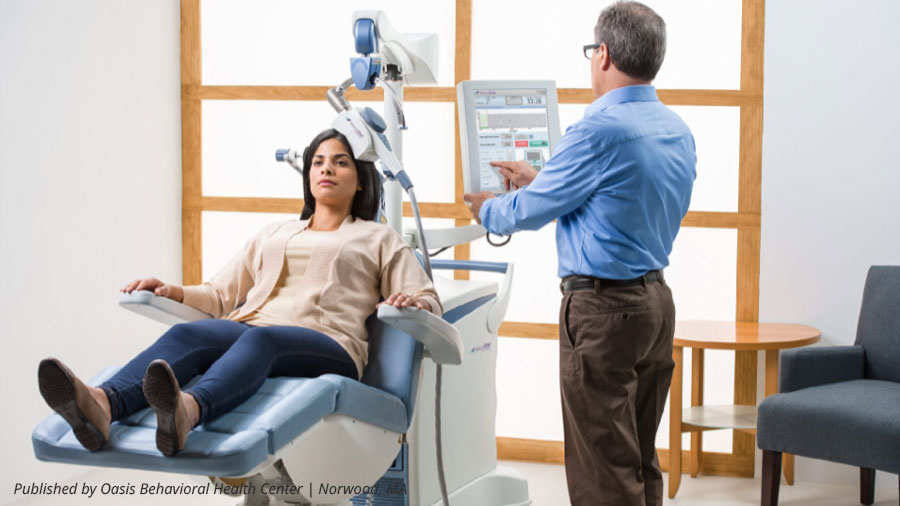
- Preparation: On the day of your first treatment, you’ll be asked to sit in a comfortable chair. There are no needles or anesthesia involved, so you can expect a completely non-invasive experience.
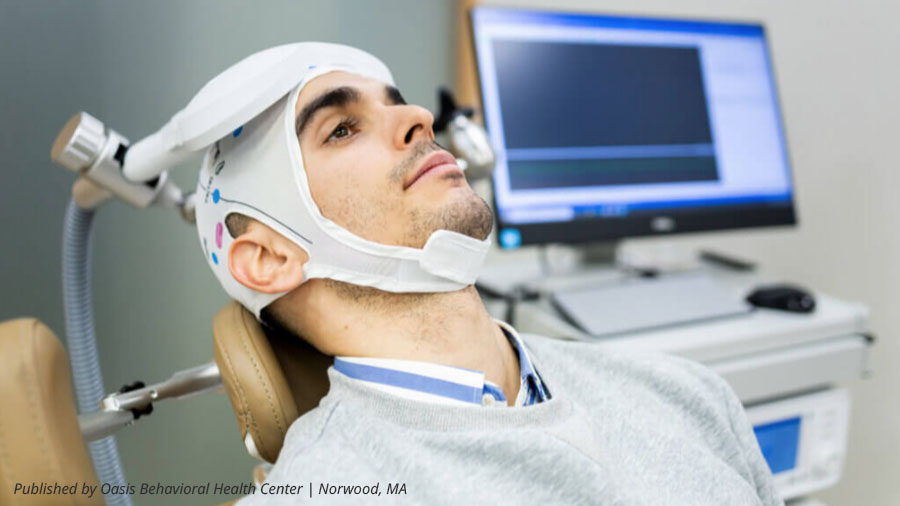
- Positioning the Coil: A magnetic coil is placed on your scalp, near the forehead, where it will target the prefrontal cortex of the brain. The coil is connected to the TMS machine, which delivers the electromagnetic pulses to your brain.
- The Magnetic Pulses: Once the coil is in place, the TMS machine will begin emitting pulses of magnetic energy. These pulses are painless, though you may feel a mild tapping sensation on your scalp during the treatment. The procedure is generally well-tolerated, and most patients find it to be a relatively comfortable experience.
- Duration and Frequency: A typical TMS session lasts about 20 minutes. Most patients will need 5 sessions per week for 4-6 weeks, depending on the treatment plan. Each session is relatively short, making it easy to fit into a busy schedule.
- Post-Treatment: After the session, you can resume your normal activities right away. Unlike other treatments for depression, such as medication or electroconvulsive therapy (ECT), TMS does not require any downtime. Some patients may experience mild side effects such as headaches or scalp discomfort, but these effects typically dissipate shortly after treatment.
What to Expect After Several Sessions
Many patients begin to notice improvements in their symptoms after just a few weeks of treatment. TMS is designed to be a cumulative treatment, meaning that its effectiveness increases over time as the brain becomes more responsive to the stimulation. While some patients feel relief after just a few sessions, full benefits are often seen after completing the entire course of therapy.
The Benefits of TMS
- Non-invasive: No surgery or anesthesia is required.
- Minimal side effects: Most patients experience only mild and temporary side effects.
- Quick sessions: Each session typically lasts less than 40 minutes, allowing for minimal disruption to daily life.
- Long-lasting results: Many patients experience sustained improvements in mood and mental health following treatment.
Conclusion
TMS is a safe, effective, and non-invasive treatment for depression and other mental health
conditions. If you're considering TMS, understanding what to expect can help make the process
more comfortable and less intimidating. If you’re interested in learning more about TMS and how it
can help you, contact Oasis Behavioral Health Center today to schedule a consultation.
Citations:
- George, M. S., et al. (2010). Noninvasive techniques for the treatment of depression. Journal of Clinical Psychiatry, 71(7), 912-919.
- Pridmore, S., et al. (2009). Transcranial magnetic stimulation in the treatment of major depression. The Journal of Clinical Psychiatry, 70(9), 1236-1241.