You've probably heard that TMS therapy can help with depression when medication hasn't worked — but does it really work? And if it does, how long does it last? At Oasis Behavioral Health Center in Norwood, MA, we believe patients deserve honest, research-backed answers. Here's a deep dive into TMS success rates, what the research says, and what life looks like after completing treatment.
TMS Success Rates: What the Research Shows
The short answer: yes, TMS works — and it works well for many people who have struggled for years to find relief.
According to current research, approximately 50 to 60 percent of patients with treatment-resistant depression experience significant improvement with TMS therapy, and 30 to 35 percent achieve full remission. For context, when additional antidepressant medications are tried in patients with treatment-resistant depression, their success rate drops to only around 20 to 30 percent — meaning TMS often outperforms the next medication attempt.
About 60 percent of people who didn't respond to other depression treatments respond to standard TMS protocols, and more than half of these patients remain in remission at six-month follow-up appointments after stopping TMS.
A 2025 analysis of over 600 published research papers spanning nearly three decades found that TMS is increasingly recognized worldwide as a safe and effective treatment, with ongoing research expanding its applications to conditions beyond depression — including anxiety, OCD, and PTSD.
How Does TMS Compare to Antidepressants?
For patients with treatment-naive depression (those trying treatment for the first time), antidepressants achieve response rates of about 60 to 70 percent. However, for patients with treatment-resistant depression — those who have failed two or more adequate medication trials — additional medications typically show success rates of only 20 to 30 percent.
TMS maintains its 60 to 70 percent response rate even in this difficult-to-treat population, making it a compelling option for people who have been cycling through medications without finding lasting relief. And unlike antidepressants, TMS does not cause systemic side effects such as weight gain, sexual dysfunction, or insomnia.
New and Improved Forms of TMS
TMS has evolved significantly since its first FDA clearance in 2008. Today, several advanced protocols are available:
- Repetitive TMS (rTMS): The original and most widely studied form, delivered in daily sessions over several weeks.
- Theta Burst Stimulation (iTBS): A newer, faster protocol that delivers treatment in as little as 3 minutes per session. Research confirms it is non-inferior to standard rTMS for treating depression.
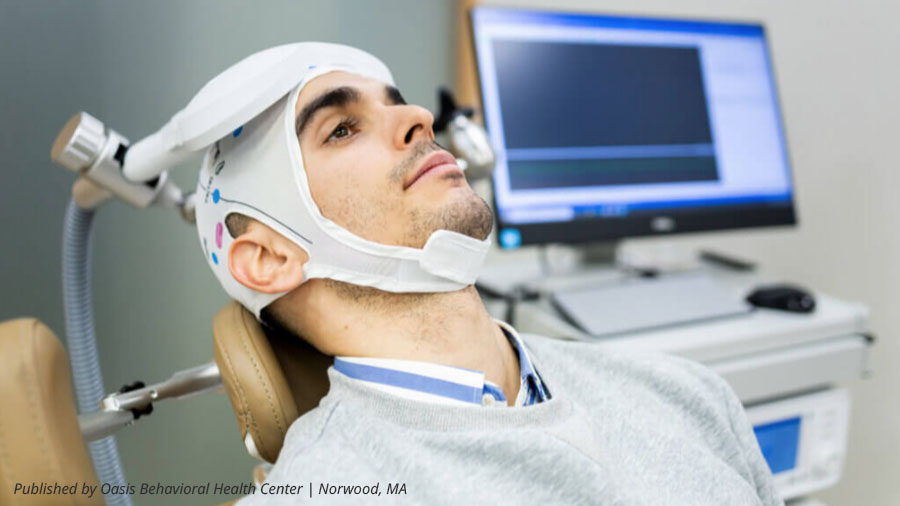
- Deep TMS (dTMS): Uses a helmet-like coil that can reach deeper brain circuits. FDA-cleared for depression and OCD.
- Accelerated TMS (aTMS): Delivers multiple brief sessions per day over about five days. In 2025, the FDA cleared an accelerated deep TMS protocol for major depressive disorder.
Researchers are also exploring MRI-guided TMS, which uses brain scan data to more precisely target stimulation for each individual patient — a promising step toward truly personalized treatment.
How Long Do TMS Results Last?
Many patients experience benefits for six months to a year after completing their TMS course. Some individuals require booster sessions if symptoms begin to return. Research published in 2026 from a real-world study of TMS patients found that more than half reported feeling somewhat or much better at their six-month follow-up after stopping treatment.
To help maintain remission, clinicians at Oasis encourage patients to continue with any ongoing psychiatric care — whether therapy, medication, or both — that was part of their treatment plan alongside TMS.
What Side Effects Should I Expect?
TMS is well-tolerated by most patients. The most commonly reported side effects are mild and temporary:
- Minor scalp discomfort or tenderness at the treatment site
- Brief headaches during or shortly after sessions
- A clicking or tapping sound from the device (earplugs are provided)
These side effects often diminish as treatment progresses and can usually be managed by adjusting the coil position or stimulation intensity. Serious side effects are extremely rare. Approximately 70 percent of patients in recent studies reported being comfortable with the treatment, and nearly half said the benefits outweighed any side effects.
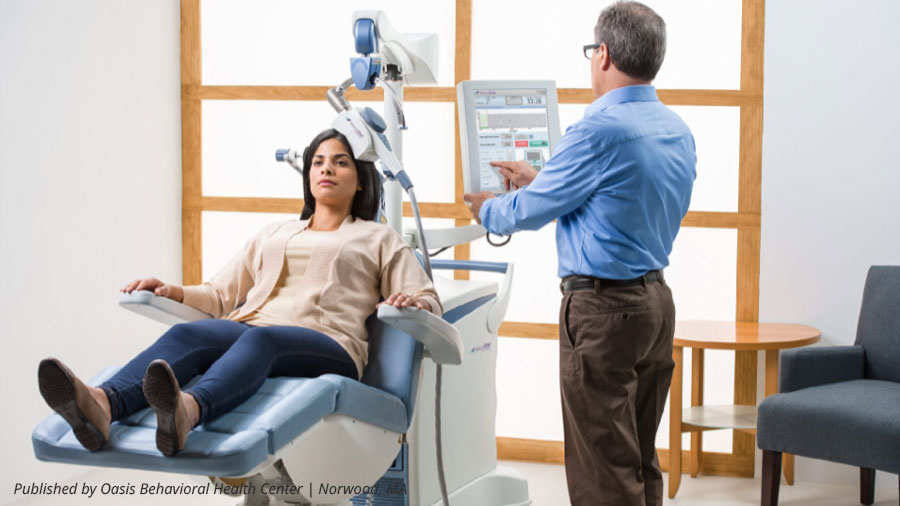
Unlike electroconvulsive therapy (ECT), TMS does not require anesthesia or sedation, and patients can drive themselves to and from every appointment.
Is TMS Right for You?
TMS may be the right next step if you have been living with major depressive disorder and have not found adequate relief from antidepressants or therapy. The best way to find out is a comprehensive evaluation with one of our psychiatrists, who will review your full history and design a personalized treatment plan.
At Oasis Behavioral Health Center, we have been one of the leading TMS providers in Massachusetts since 2012. Our TMS treatments are performed under direct psychiatrist supervision, and we accept most major insurance plans including Medicare, Aetna, Cigna, Blue Cross Blue Shield, and United Healthcare.
Call us at (617) 401-7700 or visit obhi.org to schedule your consultation today. Relief is possible — and we're here to help you find it.
Works Cited
Evolve Psychiatry. (2025, August). What Are TMS Therapy Success Rates and Research Evidence in 2025?
https://evolvepsychiatry.com/blog/what-are-tms-therapy-success-rates-and-research-evidence-in-2025
BNI Clinics. (2026, February). TMS Therapy Success Rate – Latest Studies Backed Results.
https://bniclinics.com/tms-therapy-success-rate-latest-studies-backed-results/
Farkas, G. (2024). TMS Therapy for Depression: 2024 Research & Treatment Guide.
https://drgabbyfarkas.com/tms-therapy-for-depression-latest-research-treatment-options/
McLean Neuropsychiatric Treatment Center. (2026, January). TMS in 2026: Research Round-up From the Past Year.
https://mcleanntc.com/tms-research-2026/
Trapp, N.T., et al. (2025). Consensus review and considerations on TMS to treat depression: A comprehensive update endorsed by the National Network of Depression Centers, the Clinical TMS Society, and the International Federation of Clinical Neurophysiology. Clinical Neurophysiology, 170, 206-233.
https://doi.org/10.1016/j.clinph.2024.12.015
Cleveland Clinic. (2026, February). Transcranial Magnetic Stimulation (TMS): What It Is.
https://my.clevelandclinic.org/health/treatments/17827-transcranial-magnetic-stimulation-tms
Yale Medicine. (n.d.). Transcranial Magnetic Stimulation (TMS) for Depression, OCD: What to Know.
https://www.yalemedicine.org/news/transcranial-magnetic-stimulation-tms-what-you-need-to-know
HWS Center. (2024, December). How Effective Is TMS Therapy for Depression? Complete 2025 Guide.
https://hwscenter.com/how-successful-is-tms-therapy-for-depression-your-full-guide-2025/